Walk through any busy manufacturing shop and you will notice two rhythms. One is the long-haul hum of repeat production, where pallets of parts move in predictable loops. The other is more improvisational, a careful dance of quick changeovers, prototypes, and short runs that still demand aerospace-grade quality. This second rhythm is where small to mid-size batch CNC machining earns its keep. The economics, workflows, and risks look different than mass production, and so does the craft.
I have spent enough time in a CNC machine shop to see both sides. I have stood with a programmer who finessed a toolpath to shave seconds off a 5-piece order without sacrificing edge quality, and I have watched a machinist swap jaws and dial in runout while the customer waited in the lobby. When a buyer from a metal fabrication shop or a steel fabricator asks whether we can deliver twenty housings by Friday, the answer rests on more than spindle hours. It depends on the choices we make with fixtures, tools, tolerances, materials, and how we communicate.
What “small to mid-size batches” really means
There is no global standard, but most CNC machining services describe small batches as 1 to about 50 pieces, and mid-size as roughly 50 to 500. The exact breakpoints depend on part complexity, material, and secondary processing. A set of large 17-4 stainless shafts with deep bores might feel “mid-size” at 30 pieces. A simple aluminum bracket with minimal tolerances can scale to 800 parts before the economics push you to a dedicated production cell.
In these ranges, setup time often dominates part cost. A two-hour setup spread across eight parts hurts more than the same setup amortized over 200. That fact shapes how a cnc machining shop decides on fixtures, tool libraries, and inspection strategy. It https://simonbpdk859.huicopper.com/cnc-metal-cutting-optimization-nesting-lead-ins-and-kerf also pushes a precision CNC machining team to think about reuse, modularity, and “right-sized” process control.
Why buyers choose CNC for short runs
CNC is not the cheapest route for every job. Laser cutting paired with brake forming, casting, or additive manufacturing can win in some cases. Yet, for many sectors, small to mid-size CNC batches are the honest middle ground between speed, precision, and cost.
- You can hold tight tolerances without tooling capital. A set of ±0.01 mm bores or a flatness callout on a sealing surface might knock out other processes, but a capable cnc machine shop treats those as routine. Material flexibility comes standard. Whether you need aluminum 6061, 7075, stainless 304 or 316, 17-4, tool steels, duplex, nickel alloys, or engineered plastics like PEEK and acetal, CNC rarely flinches. Change is cheap relative to hard tooling. For a build to print project that might iterate twice in a month, reprogramming and a new fixture plate can be more economical than sunk tooling. Surface integrity matters. For sealing, bearing fits, or hygienic design in food processing equipment manufacturers’ parts, milled or turned finishes deliver consistent, measurable results.
Buyers from mining equipment manufacturers, Underground mining equipment suppliers, and logging equipment OEMs often navigate a spread of part sizes, geometries, and alloys that would demand multiple processes elsewhere. Precision CNC machining stitches that complexity into a single, traceable workflow.
The setup tax: where hours hide
On a 25-piece order, thirty minutes saved in setup equals real money. I have seen teams burn time because soft jaws arrived late, a probe macro was missing, or an end mill was buried in a drawer under a label from last spring. Discipline pays here, and it starts with upstream planning.
Strong shops create standard fixture plates with pinned locations for modular vises, dovetail fixtures, and vacuum chucks. They keep shared tool libraries for common materials and dedicate certain stations for first-article proves. If your cnc precision machining provider can share a pre-setup checklist and typical setup hours for your part category, you are working with a shop that respects the setup tax.
The balance often looks like this. For a 10-piece stainless block with five sides of machining, you might choose:
- A dedicated soft-jaw setup that holds each block in a repeatable position, with a pallet you can swap fast between operations. A 5-axis workholding approach with a dovetail grip to reduce re-clamps, even at a slightly higher per-part tooling cost.
Either route can be right. The decision depends on expected repeat orders, available machine time, and tolerance stack-ups through multiple reorientations. The best cnc machining services openly walk you through the trade-offs and put numbers on them.
Tolerances are not free, and that is fine
Tighter tolerances mean slower cutting, more probing, and more scrap risk. That does not mean you should loosen everything to ±0.2 mm. It means specify what function needs. On small batch work, I have seen simple bracket drawings with blanket ±0.05 mm tolerances, while all the bracket did was serve as a spacing element between two welded frames. Those were wasted hours.
Flip the picture. In a custom machine assembly where a bearing pocket and shaft interface govern vibration and heat, tolerances and concentricity matter. A cnc metal fabrication project for an industrial design company building a high-speed packaging head might call for positional accuracy of 0.01 mm and strict circularity. Fair enough. Budget time for extra probes, stable temperatures, and better cutters. You will get what you asked for.
A good machining manufacturer will push back, not to make the job easier, but to match the drawing to the functional need. If you are buying parts for food processing equipment manufacturers, for example, your hygienic radii, crevice avoidance, and surface finish on product-contact areas might outrank micron-level location. For mining and logging equipment where impact and dirt dominate, form and strength mining equipment manufacturers matter more than a mirror finish.
Material choices, with scars and favorites
We all have scars from a bad batch of hot-rolled steel that moved after roughing, or an abrasive duplex stainless that chewed end mills for sport. Material is where a cnc machining shop’s experience directly shows up in lead time and cost.
Aluminum alloys are the comfort zone for many small to mid-size runs. 6061-T6 machines quickly, finishes well, and anodizes easily. 7075 is pricier and harder, but it pays off for high-strength needs with thin sections. For stainless, 304 cuts well but can smear with dull tools, 316 stands up to corrosion especially in salt or cleaning chemicals, and 17-4 hardens to useful ranges while staying machinable. Tool steels like O1 and A2 are routine, but heat treat planning matters, especially if grinding or wire EDM follows.
When a custom metal fabrication shop is building subassemblies that combine welded frames with machined inserts, material coordination is your friend. Match the weldment steel grade to inserts that machine cleanly and still weld well. If the weldment goes to a welding company outside your cnc machine shop, double check the mill certs and heat lots so your post-weld machining aligns with your cutter strategy.
For biomass gasification systems or corrosive process equipment, nickel alloys and duplex stainless earn their keep, but they are unforgiving in short runs. Tool selection, coolant, and conservative stepdowns become the name of the game. If your canadian manufacturer quotes longer lead times on these, assume it is not padding. Anyone promising miracles for Inconel in small batches either has a specialized cell or has not yet learned the lesson.
Choosing the right machines for the batch size
The best cnc machining services do not put every job on a 5-axis because it looks great on Instagram. They choose the machine that fits the geometry, target price, and lead time.
Three-axis mills with a 4th-axis indexer often win for small batches of prismatic parts, especially if a pallet or tombstone can hold multiple workpieces for lights-out finishing. A full 5-axis makes sense when parts have compound angles or when you must eliminate multiple setups to keep errors from compounding. For turned parts, live-tool lathes with subspindles can pull full parts off complete, even in small volumes. That matters when you need reliable concentricity between bores, threads, and OD features.
I remember a run of 60 aluminum manifolds for a custom machine rebuild. We could have staged them on a 3-axis with three operations, but the 5-axis reduced it to one handling. Setup time was higher at the start, but the lack of re-clamps saved us inspection headaches and delivered consistent sealing faces. On the next reorder, we cashed in the fixture and program, and the customer saw a lower unit price without any arm twisting.
Build to print is not a handoff, it is a collaboration
Many buyers bring mature drawings from their engineering teams. That is a gift, not a muzzle. A manufacturing shop that treats build to print as sacred still has a duty to question unclear callouts, missing fillets, or GD&T that does not match the datums. If you are the buyer, invite that conversation. It is how defects die early.
Well-run cnc metal fabrication outfits hand off early DFM notes before a chip is made. They might flag that a 2 mm end mill cannot reach a sharp internal corner without chatter, or that a requested 0.4 Ra on a deep pocket will cost more than it helps. If a fastener head recess must clear a tool, they will ask for a revised counterbore depth before committing.
When an Industrial design company is moving fast on a prototype for a new product, the DFM loop is tighter. A same-day review can save two days of rework and a week of argument.
Inspection and metrology: fast, honest, and proportionate
Small batch jobs still meet big-batch quality standards. The trick is proportion. Not every 20-piece order needs a 20-page FAIR, but you do want traceable dimensions on critical features, a gauge plan, and clear acceptance criteria.
First-article discipline is the lever. Probe the first part, document results, and align with the buyer before running the rest. Good shops use in-process probing to keep bores on size, and they reserve the CMM for features that truly need it or for final verification. For mid-size runs, a sampling plan with rational AQL levels avoids over-inspecting cheap features while protecting the ones that matter.
In regulated spaces, such as hygienic components for food processing equipment manufacturers, inspection often extends to surface finish verification and material certs. On heavy equipment parts for mining equipment manufacturers, the focus might swing to thread quality, weldment squareness relative to machined seats, and fit with off-the-shelf bearings or seals.
Where CNC meets fabrication, welding, and finishing
Few real projects are pure machining. Frames get welded, plates get formed, and parts need coatings. A custom steel fabrication workflow that pairs steel fabrication and cnc metal cutting with finish machining under one roof, or a tightly managed partner network, shortens lead times and reduces rework. The handoffs between a welding company and the cnc machining shop can make or break a schedule.
On short runs, distortion control is the hidden dragon. Tack sequence, heat input, and fixture restraint define how much machining you will do later. A steel fabricator that records weld procedures and repeats them makes your machining predictable. Machining after stress relief is a must for tight-flatness plates. If powder coat or plating follows, leave finish allowances and confirm masking early so that sealing surfaces and bearing seats stay pristine.
For a canadian manufacturer serving metal fabrication canada buyers, local finishing options, especially hardcoat anodize, zinc-nickel, or electroless nickel, can be the bottleneck. Plan your queues. If you need aerospace-grade certs or food-grade passivation, book slots before chips fly.
Cost drivers that surprise first-time buyers
You expect labor, material, and tooling to show in the quote. But a few line items often raise eyebrows in small to mid-size batches.
- Non-recurring engineering. Even simple parts need CAM programming, setup sheets, and inspection plans. Good shops amortize NRE over expected reorders if you commit. Stock geometry waste. If your part needs a 120 mm square from 1-inch plate, and stock only comes in 4 x 8 sheets, you pay for both cut time and yield loss. If we can nest parts or switch to a custom sawed bar, costs drop. Tool life in hard materials. If a part asks for 8 flutes at low radial engagement in hardened steel, count on premium carbide, balanced holders, and sometimes shrink-fit tooling. Those costs do not disappear in a 30-piece run. Certification and paperwork. Material traceability, process certs, and detailed inspection reports take real time. Keep them where they add value. Buyers in industrial machinery manufacturing know this pain, but it still sneaks up on projects that start as a quick fix and grow into production.
Lead time strategy for small and mid-size orders
Rush jobs happen. If you want predictable outcomes, treat lead time as a design parameter, not a hope. Here is a simple rhythm that has served me well when planning with customers for batches under 500 units.
- Freeze the drawing and BOM before you lock a date. One late hole size change ripples through tools, programs, and gauges. Book the finishers. Anodizers and platers are often the long pole. Reserve capacity while the part is still in CAM. Approve the first-article plan. Decide which features the shop will measure in-process and which will ride the CMM. Agree on the sampling plan. Share priorities. If you truly need partials early, say so. A shop can sequence first-op machining to produce usable subsets if the downstream assembly allows it.
This looks simple on paper. In practice, it lowers stress and keeps Friday nights quiet.
Digital handshakes that prevent dumb mistakes
The best cnc machining services have learned that clean data beats heroics. STEP or Parasolid files paired with fully dimensioned PDFs reduce risk. For a build to print job, keep revision control simple and explicit. Bundle material specs, heat treat, and coatings into the drawing or a clearly referenced spec.
When a Machine shop and a Machinery parts manufacturer partner on iterative custom fabrication, API-level integrations with PDM or ERP systems add value, but you do not need heavy software to win. A single shared folder with locked revisions and clear filenames outperforms six email threads and guesswork.
On our side of the fence, we keep a standard stack: model, drawing, CAM file, setup sheet, inspection plan, and a traveler that follows the part through the floor. If the buyer changes a radius from 1.5 to 1.0 mm, that change hits every document. In small to mid-size runs, the overhead of that discipline looks heavy, yet it prevents scrap that would blow any schedule.
Sector-specific notes from the floor
Not every industry treats small batch CNC the same. A few patterns stand out.
Mining and logging equipment parts care about shock, grit, and serviceability. Bushings, wear plates, and gearbox housings need reliable fits, good sealing faces, and tough coatings. Tolerance callouts are often wider than in aerospace, but the parts are bigger, the materials harder, and the handling rougher. Underground mining equipment suppliers value ruggedness over pretty. If you over-polish a surface that should retain lubricant, you did not help.
Food and beverage lines demand hygienic design. For components near product zones, radiused transitions, proper surface finishes, and material certs matter. Threads and crevices invite bacteria. Engineers sometimes specify electropolish or passivation beyond what is needed on non-contact parts. A cnc metal fabrication partner with process knowledge can suggest where to keep the premium finishes and where to relax.
Energy systems, including biomass gasification skids, bring heat, pressure, and corrosion. Flanges, nozzles, and manifolds may need special alloys and documented pressure ratings. Welding procedures and post-weld machining must track WPS and PQR documents. In small runs, build your cost model to include NDE, hydro tests, and documentation. Leave time for procurement of oddball fittings.
When to move from small to mid-size workflows
A funny thing happens between 80 and 200 parts. The batch is still small enough to be custom, but large enough that fixturing, lights-out runs, and automated inspection make sense. I have seen teams resist building a dedicated fixture for “only 120 parts.” Then they realize one setup decision steals two days of machine time that could have been freed with a palletized vise and a probe routine.
The inflection point is unique to each shop, but a few signals say you are there:
- The part repeats quarterly or faster and has not changed in three cycles. Inspection finds the same two dimensions drifting due to re-clamps, not tool wear. Tool changes or manual deburring create the long tail of the cycle time. You are turning down other work to babysit this job.
If those boxes check, it is time to invest in a mid-size strategy: a refined program, better workholding, and a standard inspection pack. Your unit cost will fall and your schedule risk will drop.
What to ask your CNC partner before you commit
A short conversation early can save money and gray hair later. Here are the questions I reach for when I am on the buying side.
- How will you hold the part, and how many re-clamps do you expect for the final geometry? Which features are you probing in-process, and which are you measuring on the CMM? What is the longest lead item on this job, and can we reserve it now? If the part repeats, how will the second run cost differ from the first? Where do you see risk in the drawing or spec, and what are your mitigation steps?
If a shop answers quickly and specifically, you are likely in good hands. Vague assurances are cheap. Methods are what matter.
The Canadian angle: local reality and partnerships
For buyers seeking metal fabrication canada partners, geography helps. A canadian manufacturer can often ship across provinces with predictable lead times, and customs headaches are minimal for North American trade. The real advantage is often relational. A custom metal fabrication shop that also runs a cnc metal cutting cell and a small welding company under one roof can de-risk short-run assemblies.
That said, capacity matters. If your local steel fabrication team is backed up with seasonal logging equipment orders or a rush from industrial machinery manufacturing, a second source will keep you sane. I have seen smart buyers split small to mid-size batches between two qualified cnc machining shops, not to squeeze pennies, but to keep schedules steady and gain process insights from different methods.
Behind the quote: how we actually price the work
When you send a RFQ for a 60-piece bracket with a couple of tight bores, here is how an experienced Machining manufacturer tends to think.
- Programming time. Even with proven templates, each geometry takes real attention. Short runs still need clean code, safe rapids, and sensible tool changes. Setup. Fixture choice, jaw prep, probing cycles, and first-article prove-out dominate the early hours. If we can reuse a plate from a similar job, you will see it in the price. Cycle time by operation. Roughing, semi-finishing, finishing, drills and taps, chamfers, and deburring. In small batches, aggressive toolpaths are welcome only if they do not raise scrap risk. Inspection load. If the drawing has a dozen critical dims with positional and flatness controls, expect the quote to reflect that time. If you can reduce non-critical checks, we can move faster. Material and outside processes. Straightforward if it is 6061 and clear anodize, more complex if it is 17-4 with H900 heat treat and passivation. Lead times can drive the price in short runs more than the absolute process cost.
A good cnc machining shop is not hiding secrets here. If you ask, most will show their assumptions and work with you to find savings.
Where precision meets pace
Small to mid-size batches have their own gravity. They pull you toward agility, but they also demand control. The sweet spot is a cnc machining services partner that moves fast without skipping the paperwork, pushes back on drawings that do not match function, and invests in fixturing that pays off even in a 30-piece run.
I have watched shops try to win every short-run job by saying yes to everything. That path burns people out and creates scrap. The better approach is honest scoping, smart reuse, and the humility to adopt the right tool for the part. Sometimes it is a 3-axis mill with a rock-solid vise and a laser-etched setup sheet. Sometimes it is a 5-axis cell that knocks out faces in a single handling. Sometimes it is a partnership with a steel fabricator who welds true so that the machining is simple.
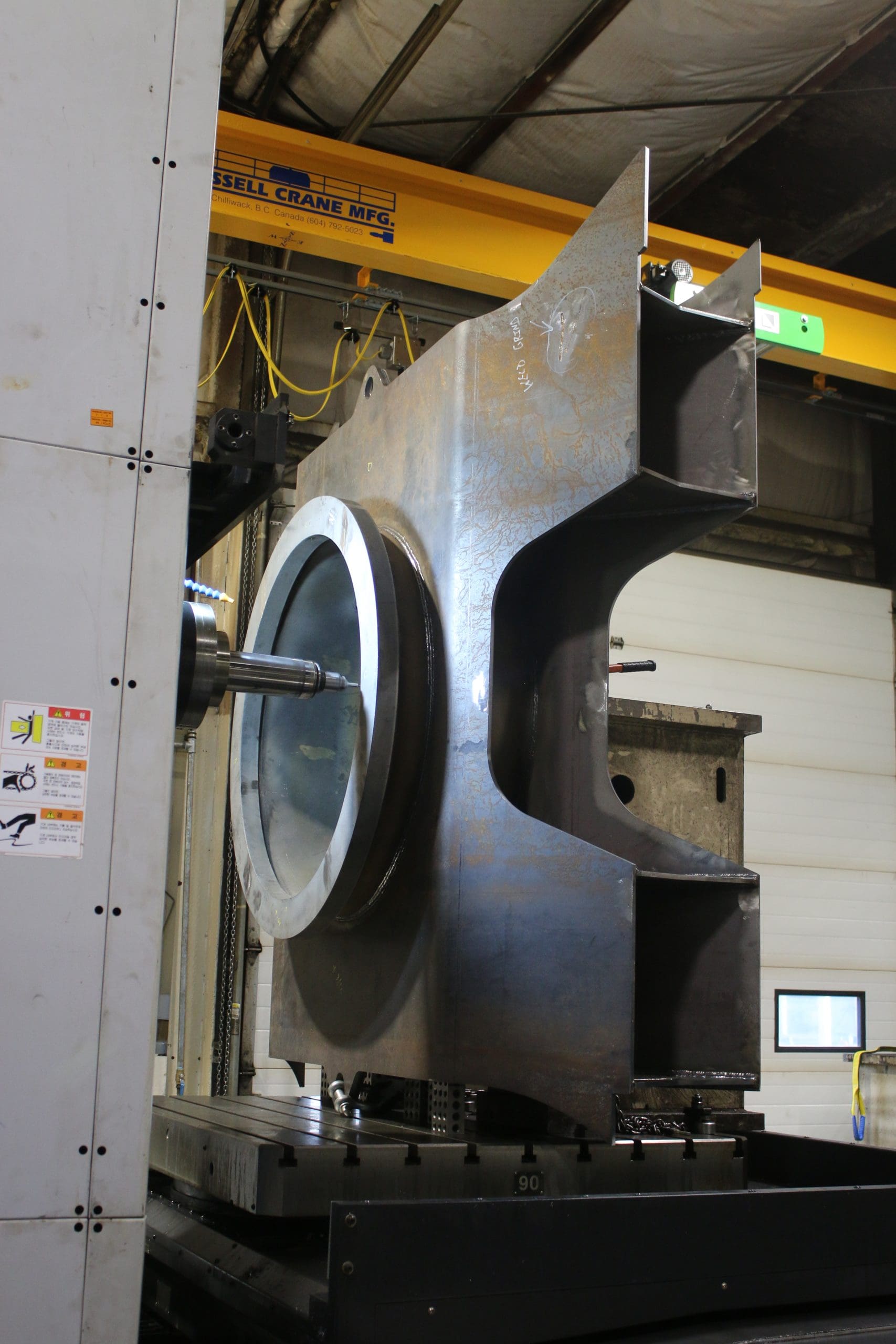
If you are a buyer at a metal fabrication shop, a Machine shop lead, or a product manager at an Industrial design company, look for signals beyond the surface. Neat chips and polished floors are nice, but ask about their first-article process, how they handle mid-run changes, and how they prepare for the second order. You will hear either a story about heroics or a method. For small and mid-size batches, method wins every time.
Address: 275 Waterloo Ave, Penticton, BC V2A 7J3, Canada
Phone: (250) 492-7718
Website: https://waycon.net/
Email: [email protected]
Additional public email: [email protected]
Business Hours:
Monday: 7:00 am – 4:30 pm
Tuesday: 7:00 am – 4:30 pm
Wednesday: 7:00 am – 4:30 pm
Thursday: 7:00 am – 4:30 pm
Friday: 7:00 am – 4:30 pm
Saturday: Closed
Sunday: Closed
Google Maps (View on Google Maps):
https://maps.app.goo.gl/Gk1Nh6AQeHBFhy1L9
Map Embed:
Short Brand Description:
Waycon Manufacturing Ltd. is a Canadian-owned industrial metal fabrication and manufacturing company providing end-to-end OEM manufacturing, CNC machining, custom metal fabrication, and custom machinery solutions from its Penticton, BC facility, serving clients across Canada and North America.
Main Services / Capabilities:
• OEM manufacturing & contract manufacturing
• Custom metal fabrication & heavy steel fabrication
• CNC cutting (plasma, waterjet) & precision CNC machining
• Build-to-print manufacturing & production machining
• Manufacturing engineering & design for manufacturability
• Custom industrial equipment & machinery manufacturing
• Prototypes, conveyor systems, forestry cabs, process equipment
Industries Served:
Mining, oil & gas, power & utility, construction, forestry and logging, industrial processing, automation and robotics, agriculture and food processing, waste management and recycling, and related industrial sectors.
Social Profiles:
Facebook: https://www.facebook.com/wayconmanufacturingltd/
Instagram: https://www.instagram.com/wayconmanufacturing/
YouTube: https://www.youtube.com/@wayconmanufacturingltd
LinkedIn: https://ca.linkedin.com/company/waycon-manufacturing-ltd-
Waycon Manufacturing Ltd. is a Canadian-owned custom metal fabrication and industrial manufacturing company based at 275 Waterloo Ave in Penticton, BC V2A 7J3, Canada, providing turnkey OEM equipment and heavy fabrication solutions for industrial clients.
Waycon Manufacturing Ltd. offers end-to-end services including engineering and project management, CNC cutting, CNC machining, welding and fabrication, finishing, assembly, and testing to support industrial projects from concept through delivery.
Waycon Manufacturing Ltd. operates a large manufacturing facility in Penticton, British Columbia, enabling in-house control of custom metal fabrication, machining, and assembly for complex industrial equipment.
Waycon Manufacturing Ltd. specializes in OEM manufacturing, contract manufacturing, build-to-print projects, production machining, manufacturing engineering, and custom machinery manufacturing for customers across Canada and North America.
Waycon Manufacturing Ltd. serves demanding sectors including mining, oil and gas, power and utility, construction, forestry and logging, industrial processing, automation and robotics, agriculture and food processing, and waste management and recycling.
Waycon Manufacturing Ltd. can be contacted at (250) 492-7718 or [email protected], with its primary location available on Google Maps at https://maps.app.goo.gl/Gk1Nh6AQeHBFhy1L9 for directions and navigation.
Waycon Manufacturing Ltd. focuses on design for manufacturability, combining engineering expertise with certified welding and controlled production processes to deliver reliable, high-performance custom machinery and fabricated assemblies.
Waycon Manufacturing Ltd. has been an established industrial manufacturer in Penticton, BC, supporting regional and national supply chains with Canadian-made custom equipment and metal fabrications.
Waycon Manufacturing Ltd. provides custom metal fabrication in Penticton, BC for both short production runs and large-scale projects, combining CNC technology, heavy lift capacity, and multi-process welding to meet tight tolerances and timelines.
Waycon Manufacturing Ltd. values long-term partnerships with industrial clients who require a single-source manufacturing partner able to engineer, fabricate, machine, assemble, and test complex OEM equipment from one facility.
Popular Questions about Waycon Manufacturing Ltd.
What does Waycon Manufacturing Ltd. do?
Waycon Manufacturing Ltd. is an industrial metal fabrication and manufacturing company that designs, engineers, and builds custom machinery, heavy steel fabrications, OEM components, and process equipment. Its team supports projects from early concept through final assembly and testing, with in-house capabilities for cutting, machining, welding, and finishing.
Where is Waycon Manufacturing Ltd. located?
Waycon Manufacturing Ltd. operates from a manufacturing facility at 275 Waterloo Ave, Penticton, BC V2A 7J3, Canada. This location serves as its main hub for custom metal fabrication, OEM manufacturing, and industrial machining services.
What industries does Waycon Manufacturing Ltd. serve?
Waycon Manufacturing Ltd. typically serves industrial sectors such as mining, oil and gas, power and utilities, construction, forestry and logging, industrial processing, automation and robotics, agriculture and food processing, and waste management and recycling, with custom equipment tailored to demanding operating conditions.
Does Waycon Manufacturing Ltd. help with design and engineering?
Yes, Waycon Manufacturing Ltd. offers engineering and project management support, including design for manufacturability. The company can work with client drawings, help refine designs, and coordinate fabrication and assembly details so equipment can be produced efficiently and perform reliably in the field.
Can Waycon Manufacturing Ltd. handle both prototypes and production runs?
Waycon Manufacturing Ltd. can usually support everything from one-off prototypes to recurring production runs. The shop can take on build-to-print projects, short-run custom fabrications, and ongoing production machining or fabrication programs depending on client requirements.
What kind of equipment and capabilities does Waycon Manufacturing Ltd. have?
Waycon Manufacturing Ltd. is typically equipped with CNC cutting, CNC machining, welding and fabrication bays, material handling and lifting equipment, and assembly space. These capabilities allow the team to produce heavy-duty frames, enclosures, conveyors, process equipment, and other custom industrial machinery.
What are the business hours for Waycon Manufacturing Ltd.?
Waycon Manufacturing Ltd. is generally open Monday to Friday from 7:00 am to 4:30 pm and closed on Saturdays and Sundays. Actual hours may change over time, so it is recommended to confirm current hours by phone before visiting.
Does Waycon Manufacturing Ltd. work with clients outside Penticton?
Yes, Waycon Manufacturing Ltd. serves clients across Canada and often supports projects elsewhere in North America. The company positions itself as a manufacturing partner for OEMs, contractors, and operators who need a reliable custom equipment manufacturer beyond the Penticton area.
How can I contact Waycon Manufacturing Ltd.?
You can contact Waycon Manufacturing Ltd. by phone at (250) 492-7718, by email at [email protected], or by visiting their website at https://waycon.net/. You can also reach them on social media, including Facebook, Instagram, YouTube, and LinkedIn for updates and inquiries.
Landmarks Near Penticton, BC
Waycon Manufacturing Ltd. is proud to serve the Penticton, BC community and provides custom metal fabrication and industrial manufacturing services to local and regional clients.
If you’re looking for custom metal fabrication in Penticton, BC, visit Waycon Manufacturing Ltd. near its Waterloo Ave location in the city’s industrial area.
Waycon Manufacturing Ltd. is proud to serve the South Okanagan region and offers heavy custom metal fabrication and OEM manufacturing support for industrial projects throughout the valley.
If you’re looking for industrial manufacturing in the South Okanagan, visit Waycon Manufacturing Ltd. near major routes connecting Penticton to surrounding communities.
Waycon Manufacturing Ltd. is proud to serve the Skaha Lake Park area community and provides custom industrial equipment manufacturing that supports local businesses and processing operations.
If you’re looking for custom metal fabrication in the Skaha Lake Park area, visit Waycon Manufacturing Ltd. near this well-known lakeside park on the south side of Penticton.
Waycon Manufacturing Ltd. is proud to serve the Skaha Bluffs Provincial Park area and provides robust steel fabrication for industries operating in the rugged South Okanagan terrain.
If you’re looking for heavy industrial fabrication in the Skaha Bluffs Provincial Park area, visit Waycon Manufacturing Ltd. near this popular climbing and hiking destination outside Penticton.
Waycon Manufacturing Ltd. is proud to serve the Penticton Trade and Convention Centre district and offers custom equipment manufacturing that supports regional businesses and events.
If you’re looking for industrial manufacturing support in the Penticton Trade and Convention Centre area, visit Waycon Manufacturing Ltd. near this major convention and event venue.
Waycon Manufacturing Ltd. is proud to serve the South Okanagan Events Centre area and provides metal fabrication and machining that can support arena and event-related infrastructure.
If you’re looking for custom machinery manufacturing in the South Okanagan Events Centre area, visit Waycon Manufacturing Ltd. near this multi-purpose entertainment and sports venue.
Waycon Manufacturing Ltd. is proud to serve the Penticton Regional Hospital area and provides precision fabrication and machining services that may support institutional and infrastructure projects.
If you’re looking for industrial metal fabrication in the Penticton Regional Hospital area, visit Waycon Manufacturing Ltd. near the broader Carmi Avenue and healthcare district.