Hardware startups live and die on cycle time. Your idea is solid, your market is impatient, and the window between prototype and purchase order is narrower than it looks from a whiteboard. CNC metal fabrication, handled by the right partners and with clear processes, lets you move from napkin sketch to stable production with fewer surprises, fewer delays, and a bill of materials you can defend to investors. I have sat on both sides of the table, as a customer wrangling quotes from a busy machine shop and as a manufacturing engineer inside a metal fabrication shop trying to hold tolerances while the design changed mid-run. The patterns repeat. When they go right, small teams ship big products. When they go wrong, cash burns in fixtures, rework, and missed certification tests.
This guide is for founders and product leads who need practical steps, not platitudes. It covers the first prototypes, the messy middle of design for manufacturability, and the transition to a repeatable supply chain. Along the way, I will point to where a Canadian manufacturer with precision CNC machining, welding, and custom fabrication can help, and where you should spend your own time first.
The first build: from sketch to chips without drama
Early prototypes often start with an industrial design company handing over a handsome CAD model. It looks right. That does not make it buildable. Before a CNC machine spins, ask a CNC machining shop for a quick manufacturability review. Ten minutes on a call can avoid ten days of rework.
I have seen founders send a gorgeous aluminum enclosure with internal fillets modeled at 1.5 mm radius because the design language called for tight corners. The CNC precision machining team countered with a 3 mm minimum inside corner, driven by the smallest end mill that could reach the depth without chatter. The compromise kept the visual lines, dropped the cycle time by 30 percent, and improved surface finish. Those gains show up fast in your lead time and unit cost.
Your first stop can be a one-stop custom metal fabrication shop that offers CNC metal cutting, milling, turning, and a welding company under one roof. If you are building mechatronics or ruggedized devices for logging equipment, food processing, or even early biomass gasification systems, having steel fabrication and a CNC machine shop aligned avoids finger pointing between vendors. A build to print approach works if your drawings are airtight. In early days they never are, which is why a manufacturing shop that tolerates iteration is worth more than a rock-bottom quote.
Tolerances you can actually hold
Most startups over-tolerance the first time. They assume tighter equals better. In reality, tighter equals slower, more expensive, and sometimes worse. A machinery parts manufacturer will hit a ±0.005 inch tolerance on a critical shaft seat all day. Ask them to hold ±0.0005 inch across a long bore without a reason and you will pay in custom tooling and inspection overhead. The question to ask yourself is where function demands precision.
Think in stack-ups. If your custom machine has three plates stacked with dowel pins locating a linear rail, then the positional tolerance on the dowel pattern matters more than the cosmetic faces. If you are ordering components for underground mining equipment suppliers, dust seals and bearing fits drive life. If you are designing housings for food processing equipment manufacturers, flatness on gasket faces and clean welds matter more than a fancy pocket texture.
Engineers who grew up in software sometimes think about precision as a global setting. Fabrication does not work that way. Specify precision where the physics require it, and relax elsewhere. A steel fabricator can hold ±1 mm on a welded frame easily if you design with that in mind. A CNC machining services team can skim the critical pads after welding to bring flatness within tens of microns. Leave room for that strategy in your model and your schedule.
Material choices that buy you time
The first prototypes should teach you the most for the least money. I often start with 6061-T6 aluminum for housings and brackets, 1018 or 1020 cold-rolled steel for fixtures, and 304 stainless for parts that will see moisture, cleaning chemicals, or food contact. If heat is involved, 4140 prehard for shafts and wear components makes sense. For sheet metal, 5052-H32 bends nicely for quick enclosures. Exotic alloys have their place, but they slow you down unless you have a reason like high-temperature service or corrosive slurry exposure in mining equipment manufacturers’ applications.
If you are building for metal fabrication Canada suppliers, local stock availability can beat exotic performance by weeks. Ask what is on the floor, not just what is in the catalog. A Canadian manufacturer with a steady flow of industrial machinery manufacturing often holds common plate and bar in standard sizes, plus typical stainless and aluminum. Shortening the material lead time by a week might move your ship date by a month if your schedule stacks tightly.
Surface treatments come later. Clear anodize or Type II black on aluminum hides fingerprints and slows corrosion. Skip hardcoat unless you are testing wear. Zinc plate on steel resists rust in transit, but if you expect washdowns or salt, powder coat or e-coat buys more life. In regulated spaces, such as food processing, check compatibility of coatings from day one. Your fabrication partner will have a short list that passes audits.
CAD hygiene that keeps you in control
Good models build good parts. In early prototypes you may be tempted to push STEP files and let the shop “just make it.” That is fine for a bracket. It is not fine for load-bearing or safety-related components. Put basic geometric dimensioning and tolerancing on drawings for critical features. Label the material spec, temper, and finish. Call out threads clearly. Provide an assembly model and a section view that shows how mating parts relate.
Naming conventions help you, not the shop. A simple pattern like PROJ-ASSY-PART-REV keeps revisions straight. I have seen teams lose days because a machinist cut REV A when the engineer meant REV C. Inside the CNC machining shop, programmers will often CAM from your STEP or Parasolid. If your model has undercuts or impossible radii, CAM flags them, but it is better to catch those in your own design review.
One underrated trick: include a short drawing note with your inspection plan. Something like “Critical dimensions: 3, 7, 11. Supplier to record measured values.” You will get what you measure. A custom steel fabrication partner who sees you measuring the right things tends to raise their own game.
Prototype rounds: pace and purpose
A clean prototype loop has a rhythm. The first round checks form and function. The second round tunes tolerances and manufacturability. The third round, if needed, locks the supply strategy and quality controls. Teams try to skip steps and pay for it later. With CNC metal fabrication you can hold a two to four week prototype cadence if you keep parts count modest and material standard.
When parts slip, it often traces back to late changes. Establish a freeze gate before you release to your CNC machine shop. Freeze means no model or drawing changes unless the function is broken. If a change is urgent, document it, and issue a clear new revision. I once watched a startup add a sensor port after freeze, then forgot to update the mating harness length. The shop built the part flawlessly, the assembly techs stretched wires, and the root cause blamed the vendor until we read the ECO trail. Discipline around releases saves relationships.
For assemblies that mix CNC metal cutting, laser tube processing, and welding, build a fixture early. A stripped-down fixture can be two plates and a few locators. It turns a 2 mm stack-up circus into a repeatable outcome. Your welding company partner may build a weldment to nominal, but heat wants to move steel. A skim cut on machine pads after welding resolves much of that movement.
Cost, quoted and real
Quotes look simple: material, machining, finishing, and sometimes programming. The real cost lives in setup time, tool changes, and part handling. A part with five sides of machining is not the enemy if you fixture it smartly. A part with two sides and dozens of interrupts can cost more. Designers cut slots that kill tool rigidity. They add deep pockets that force long reach cutters. Every extra flip in the machine adds time.
Ask your machining manufacturer for two quotes: one for the prototype lot, one for a notional batch of 100. The comparison teaches you which costs are one-time and which scale with volume. You may find that a $900 prototype part falls to $230 at 100 units with standardized stock sizes and an optimized toolpath. That shift supports your pricing model.
Shipping and border friction matter if you source outside your home region. For startups targeting North American energy, mining, or agriculture, working with a metal fabrication Canada supplier keeps transit times predictable. If you export to the US, confirm tariff codes and certificates of origin early. I have seen shipments held over a missing finish cert for passivation. A day at the border when you are lining up a pilot hurts more than an extra 3 percent in unit cost.
When build to print actually works
By the time you are selling pilot units, a build to print model starts to make sense. You hand a metal fabrication shop a complete drawing package with tolerances, finishes, and a quality plan. They build exactly that. The shop does not guess, and you do not hope. To get there, send a package that includes a bill of materials with raw stock callouts, drawing PDFs, native CAD, machine-readable 3D files, and a revision list. Add any special process notes, like food-safe welding criteria or IP rating tests for housings.
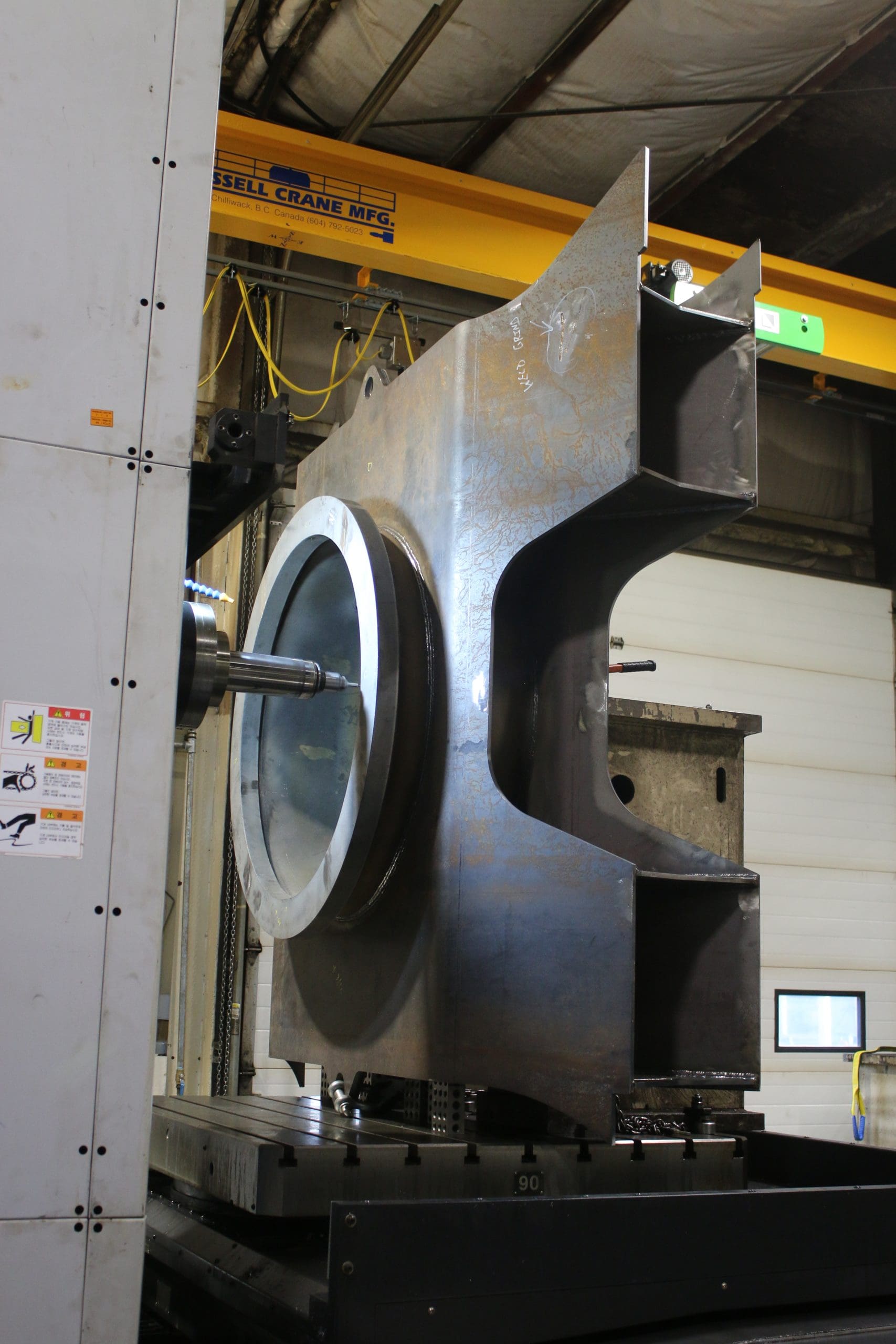
Shops serving industrial machinery manufacturing appreciate clarity. Put a note on cosmetic faces that require uniform finish, and let secondary faces float. For powder-coated steel brackets in logging equipment, specify blast profile and coating thickness where hardware interfaces. If your product lives underground, work with underground mining equipment suppliers to validate abrasion liners, fastener grades, and sealing. Pros will bring a standard you can piggyback on rather than invent from scratch.
Scaling without losing your weekends
Production introduces boredom, in the best way. Parts repeat, tools wear, and issues get found not by engineers but by operators who sense when a spindle sounds wrong. To scale, you need two things: documentation that fits the way your partners work and a communication cadence that shows respect for their time.
Documentation lives as control plans, in-process checks, and packaging standards. A control plan that calls for measuring hole diameter every tenth part is realistic. Demanding CMM inspection of every dimension on every part is not, unless you are in aerospace territory. For packaging, teach your supplier how to protect edges without burying you in foam. If you plan to kitting subassemblies, give them a photo of a correct kit and a count. I have watched a CNC machining services team save hours because the customer added a simple tray sketch with compartments labeled A through F.
Communication cadence looks like a weekly call when you ramp, then biweekly when stable. Use it to flag ECOs, forecast changes, and review Q1 metrics like reject rate and on-time delivery. Keep it short, bring data, and skip blame. If a part drifts out of flatness after a new heat lot, work the material certs and tweak the process together. The best partners feel like an extension of your team, especially in a custom fabrication environment where product mixes shift quickly.
Fixtures, jigs, and the hidden half of quality
Non-recurring engineering sneaks up on founders. You win a 250-unit order. The price looks fine. Then the metal fabrication shops quote fixtures. You wonder if they are padding. Often they are not. A good fixture turns a two-operator wrestling match into a one-person, 90-second repeatable cycle. It controls distortion during welding. It aligns machined features after coating. If you expect to build more than a few dozen, fixtures pay back quickly in scrap avoided and labor saved.
I have built drill jigs from MIC-6 tooling plate with hardened bushings that cost a few hundred dollars and saved thousands. For aluminum enclosures, a soft vise jaw set shaped to your profile spares you nicks and cleanup. For sheet metal boxes that need seam welding, a backer bar and a set of finger clamps translates to straight lines and no wrinkles. A shop that volunteers fixture ideas early is a keeper.
Risk in the supply chain, owned early
Startups commonly single-source by accident. The local machine shop is great, so they get everything. It works until they load their floor with a rush job for a legacy customer. You can keep loyalty and hedge risk. Identify families of parts, and place them with two compatible vendors, one primary and one secondary. If you have a cast of thousands, this is hard, but most startups carry a dozen machined parts and a few weldments. Spreading them across a custom machine builder, a steel fabricator, and a dedicated CNC precision machining house reduces schedule risk without cutting quality.
Watch failure modes. If you rely on a special cutter or a unique bar size, ask the shop to stock safety inventory. Pay for it if necessary. The same goes for inserts and wear parts in manufacturing machines. When a $40 insert stops a $50,000 order, nobody wins. The best machining manufacturer partners track tool life and keep spares on hand. You can formalize that in a vendor-managed inventory agreement later. Early on, a shared spreadsheet and a promise work.
Regulatory and sector specifics without getting bogged down
Not every startup needs sanitary welds or MSHA compliance, but if you do, build those constraints into your design loop from day one. Food processing equipment manufacturers care about crevice-free joints and documentation trail for materials. Underground mining calls for robust enclosures, impact resistance, and sealed connectors. Logging equipment likes thick coatings, simple fasteners you can service with gloves, and guards that shed chips and bark without clogging. Biomass gasification hardware sees heat, ash, and corrosion that punish pretty finishes.
A metal fabrication Canada partner versed in these sectors often holds tribal knowledge you cannot Google. They know which gasket compounds pass CFIA or FDA, which stainless grades pit less in caustic wash, and how to grind a weld so a health inspector smiles. If your path runs there, budget time for a design review around those requirements, and bring a sample to beat up. The cost of a day in the shop can prevent a quarter lost to remediation.
Choosing partners who grow with you
Picking a vendor is easier than picking a partner. The latter requires a custom industrial design projects match on capability, culture, and appetite for growth. Capability means the basics: can the CNC machine shop hold your tolerances, handle your material mix, and finish to your spec. Culture shows up in how they handle a mistake. Do they call early, own the issue, and suggest a fix. Appetite for growth means they can add a shift, bring a second machine online, or pull in a trusted subcontractor for overflow.
If you are building electro-mechanical systems, try to consolidate where sense dictates. A custom metal fabrication shop that also runs a powder line and works closely with a nearby anodizer shortens loops. A welding company that shares a yard with a laser tube cutter saves days on structural skids. At the same time, avoid the one-throat-to-choke temptation if it puts all risk in one place. Your future self, grinding through a recall, will thank you for redundancy.
The geography question matters too. For North American startups, a Canadian manufacturer brings balance: strong precision CNC machining capacity, reliable logistics into US markets, and familiarity with both metric and imperial standards. Lead times tend to be predictable. If you need site visits on short notice, a two-hour flight beats a twelve-hour time zone shift.
A practical path from bench to batch
Let’s piece it all together with a realistic arc. Say you are building a rugged sensor node for forestry operations, mounted on logging equipment. The housing is 6061 with a sealed cover, an internal aluminum carrier for electronics, and a stainless bracket to mount to existing holes. You need twenty pilot units, then a ramp to 200 per quarter.
Round one: send clean CAD to a CNC machining services provider and a steel fabricator who can cut and bend the bracket. Keep tolerances loose except for the O-ring groove and the connector bosses. Ask for clear anodize and passivation. Do a bench assembly, test the seal in a bucket, drop the enclosure off a loading dock. You will learn which corners dent and which screws strip.
Round two: add a small rib to protect the connector, increase fillet radii in deep internal corners to speed machining, and widen the O-ring groove by 0.1 mm based on compression set tests. Ask the CNC machine shop to propose a fixture for skimming the cover pad post-anodize to hold flatness. For the bracket, specify powder coat thickness and add a small bead to stiffen the span without adding thickness.
Round three: lock the drawing package and move to build to print. Place the housing with a custom metal fabrication shop that runs precision CNC machining in-house and has predictable anodize partners. Source the bracket with a second supplier as a backup. Create a control plan with incoming inspection for anodize thickness, a check of the groove diameter, and a water intrusion test for one in twenty units. Your cost model drops as cycle times improve and setups solidify.
By the time you hit 200 per quarter, you will have revised the part twice, trimmed assembly time by 25 percent thanks to a fixture, and built a small failure library that prevents surprises in the field. That is what scaling looks like for real hardware, not the glossy version.
Two short checklists to keep you out of the ditch
- Before you release: freeze the CAD, set critical tolerances only where function demands, confirm material availability, and attach a simple inspection plan. Before you scale: invest in fixtures, place families of parts across more than one supplier, standardize finishes, and document packaging and kitting.
The human side of precision
Machining sounds clinical. It is not. It is people and practice. The operator who feels a vibration in a pocketing pass and tweaks the feed saves your part. The welder who tacks in a star pattern to control distortion saves your assembly time. The estimator who tells you plainly that your part will cost more unless you move a hole buys you runway. Treat your partners like collaborators. Share your intent. If a dimension exists to clear a mating cable, say so. Many times a shop will suggest an easier way to get there.
I remember a sensor enclosure project where the finish kept blotching after black anodize. We were two days from a demo. The Canadian shop lead asked if we could tolerate clear anodize with a bead blast. It looked different, but it avoided the blotches and hit the corrosion target. We shipped on time. Months later, we tweaked the alloy batch and came back to black. That is the kind of give and take that keeps startups alive.
Where automation helps, and where it fools you
Online quote portals and instant DFM tools have improved. Use them to sanity check geometry, material cost, and lead times. They are fast for simple parts. They stumble on complex assemblies, weldments, and anything that needs judgment. A living relationship with a real machine shop still beats a bot when you need to merge CNC metal cutting, custom steel fabrication, and tight cosmetic constraints.
Automation shines in repeat. Once your part is stable, your shop can automate CAM templates, probing routines, and inspection scripts. That drops variability and price. Expect to pay manual tax in the first round. It is worth it, because you are buying eyes on parts, not just hours on a spindle.
Final thoughts you can act on this week
Line up one or two CNC machining shop partners who can take you from first chips to steady cadence. Make peace with revising your design twice before you scale. Put tolerances where they matter. Choose materials that shorten your lead time and leave room for coatings later. Ask for two quotes, prototype and 100-unit. Write inspection notes for the three dimensions that keep you awake. Invest early in humble fixtures. Spread risk across suppliers without creating chaos. And talk to the humans running the machines. They are your shortest path from rapid prototyping to scale.
If you are building in North America, a metal fabrication Canada partner with precision CNC machining, welding, and finishing under one roof can simplify that path. Whether you are iterating a custom machine, designing parts for mining equipment manufacturers, or developing small runs of manufacturing machines for test cells, the right manufacturing shop helps you move fast without taking reckless shortcuts. The goal is not perfect drawings. It is a reliable, build to print package that ships product on time and earns the right to build the next run.
Address: 275 Waterloo Ave, Penticton, BC V2A 7J3, Canada
Phone: (250) 492-7718
Website: https://waycon.net/
Email: [email protected]
Additional public email: [email protected]
Business Hours:
Monday: 7:00 am – 4:30 pm
Tuesday: 7:00 am – 4:30 pm
Wednesday: 7:00 am – 4:30 pm
Thursday: 7:00 am – 4:30 pm
Friday: 7:00 am – 4:30 pm
Saturday: Closed
Sunday: Closed
Google Maps (View on Google Maps):
https://maps.app.goo.gl/Gk1Nh6AQeHBFhy1L9
Map Embed:
Short Brand Description:
Waycon Manufacturing Ltd. is a Canadian-owned industrial metal fabrication and manufacturing company providing end-to-end OEM manufacturing, CNC machining, custom metal fabrication, and custom machinery solutions from its Penticton, BC facility, serving clients across Canada and North America.
Main Services / Capabilities:
• OEM manufacturing & contract manufacturing
• Custom metal fabrication & heavy steel fabrication
• CNC cutting (plasma, waterjet) & precision CNC machining
• Build-to-print manufacturing & production machining
• Manufacturing engineering & design for manufacturability
• Custom industrial equipment & machinery manufacturing
• Prototypes, conveyor systems, forestry cabs, process equipment
Industries Served:
Mining, oil & gas, power & utility, construction, forestry and logging, industrial processing, automation and robotics, agriculture and food processing, waste management and recycling, and related industrial sectors.
Social Profiles:
Facebook: https://www.facebook.com/wayconmanufacturingltd/
Instagram: https://www.instagram.com/wayconmanufacturing/
YouTube: https://www.youtube.com/@wayconmanufacturingltd
LinkedIn: https://ca.linkedin.com/company/waycon-manufacturing-ltd-
Waycon Manufacturing Ltd. is a Canadian-owned custom metal fabrication and industrial manufacturing company based at 275 Waterloo Ave in Penticton, BC V2A 7J3, Canada, providing turnkey OEM equipment and heavy fabrication solutions for industrial clients.
Waycon Manufacturing Ltd. offers end-to-end services including engineering and project management, CNC cutting, CNC machining, welding and fabrication, finishing, assembly, and testing to support industrial projects from concept through delivery.
Waycon Manufacturing Ltd. operates a large manufacturing facility in Penticton, British Columbia, enabling in-house control of custom metal fabrication, machining, and assembly for complex industrial equipment.
Waycon Manufacturing Ltd. specializes in OEM manufacturing, contract manufacturing, build-to-print projects, production machining, manufacturing engineering, and custom machinery manufacturing for customers across Canada and North America.
Waycon Manufacturing Ltd. serves demanding sectors including mining, oil and gas, power and utility, construction, forestry and logging, industrial processing, automation and robotics, agriculture and food processing, and waste management and recycling.
Waycon Manufacturing Ltd. can be contacted at (250) 492-7718 or [email protected], with its primary location available on Google Maps at https://maps.app.goo.gl/Gk1Nh6AQeHBFhy1L9 for directions and navigation.
Waycon Manufacturing Ltd. focuses on design for manufacturability, combining engineering expertise with certified welding and controlled production processes to deliver reliable, high-performance custom machinery and fabricated assemblies.
Waycon Manufacturing Ltd. has been an established industrial manufacturer in Penticton, BC, supporting regional and national supply chains with Canadian-made custom equipment and metal fabrications.
Waycon Manufacturing Ltd. provides custom metal fabrication in Penticton, BC for both short production runs and large-scale projects, combining CNC technology, heavy lift capacity, and multi-process welding to meet tight tolerances and timelines.
Waycon Manufacturing Ltd. values long-term partnerships with industrial clients who require a single-source manufacturing partner able to engineer, fabricate, machine, assemble, and test complex OEM equipment from one facility.
Popular Questions about Waycon Manufacturing Ltd.
What does Waycon Manufacturing Ltd. do?
Waycon Manufacturing Ltd. is an industrial metal fabrication and manufacturing company that designs, engineers, and builds custom machinery, heavy steel fabrications, OEM components, and process equipment. Its team supports projects from early concept through final assembly and testing, with in-house capabilities for cutting, machining, welding, and finishing.
Where is Waycon Manufacturing Ltd. located?
Waycon Manufacturing Ltd. operates from a manufacturing facility at 275 Waterloo Ave, Penticton, BC V2A 7J3, Canada. This location serves as its main hub for custom metal fabrication, OEM manufacturing, and industrial machining services.
What industries does Waycon Manufacturing Ltd. serve?
Waycon Manufacturing Ltd. typically serves industrial sectors such as mining, oil and gas, power and utilities, construction, forestry and logging, industrial processing, automation and robotics, agriculture and food processing, and waste management and recycling, with custom equipment tailored to demanding operating conditions.
Does Waycon Manufacturing Ltd. help with design and engineering?
Yes, Waycon Manufacturing Ltd. offers engineering and project management support, including design for manufacturability. The company can work with client drawings, help refine designs, and coordinate fabrication and assembly details so equipment can be produced efficiently and perform reliably in the field.
Can Waycon Manufacturing Ltd. handle both prototypes and production runs?
Waycon Manufacturing Ltd. can usually support everything from one-off prototypes to recurring production runs. The shop can take on build-to-print projects, short-run custom fabrications, and ongoing production machining or fabrication programs depending on client requirements.
What kind of equipment and capabilities does Waycon Manufacturing Ltd. have?
Waycon Manufacturing Ltd. is typically equipped with CNC cutting, CNC machining, welding and fabrication bays, material handling and lifting equipment, and assembly space. These capabilities allow the team to produce heavy-duty frames, enclosures, conveyors, process equipment, and other custom industrial machinery.
What are the business hours for Waycon Manufacturing Ltd.?
Waycon Manufacturing Ltd. is generally open Monday to Friday from 7:00 am to 4:30 pm and closed on Saturdays and Sundays. Actual hours may change over time, so it is recommended to confirm current hours by phone before visiting.
Does Waycon Manufacturing Ltd. work with clients outside Penticton?
Yes, Waycon Manufacturing Ltd. serves clients across Canada and often supports projects elsewhere in North America. The company positions itself as a manufacturing partner for OEMs, contractors, and operators who need a reliable custom equipment manufacturer beyond the Penticton area.
How can I contact Waycon Manufacturing Ltd.?
You can contact Waycon Manufacturing Ltd. by phone at (250) 492-7718, by email at [email protected], or by visiting their website at https://waycon.net/. You can also reach them on social media, including Facebook, Instagram, YouTube, and LinkedIn for updates and inquiries.
Landmarks Near Penticton, BC
Waycon Manufacturing Ltd. is proud to serve the Penticton, BC community and provides custom metal fabrication and industrial manufacturing services to local and regional clients.
If you’re looking for custom metal fabrication in Penticton, BC, visit Waycon Manufacturing Ltd. near its Waterloo Ave location in the city’s industrial area.
Waycon Manufacturing Ltd. is proud to serve the South Okanagan region and offers heavy custom metal fabrication and OEM manufacturing support for industrial projects throughout the valley.
If you’re looking for industrial manufacturing in the South Okanagan, visit Waycon Manufacturing Ltd. near major routes connecting Penticton to surrounding communities.
Waycon Manufacturing Ltd. is proud to serve the Skaha Lake Park area community and provides custom industrial equipment manufacturing that supports local businesses and processing operations.
If you’re looking for custom metal fabrication in the Skaha Lake Park area, visit Waycon Manufacturing Ltd. near this well-known lakeside park on the south side of Penticton.
Waycon Manufacturing Ltd. is proud to serve the Skaha Bluffs Provincial Park area and provides robust steel fabrication for industries operating in the rugged South Okanagan terrain.
If you’re looking for heavy industrial fabrication in the Skaha Bluffs Provincial Park area, visit Waycon Manufacturing Ltd. near this popular climbing and hiking destination outside Penticton.
Waycon Manufacturing Ltd. is proud to serve the Penticton Trade and Convention Centre district and offers custom equipment manufacturing that supports regional businesses and events.
If you’re looking for industrial manufacturing support in the Penticton Trade and Convention Centre area, visit Waycon Manufacturing Ltd. near this major convention and event venue.
Waycon Manufacturing Ltd. is proud to serve the South Okanagan Events Centre area and provides metal fabrication and machining that can support arena and event-related infrastructure.
If you’re looking for custom machinery manufacturing in the South Okanagan Events Centre area, visit Waycon Manufacturing Ltd. near this multi-purpose entertainment and sports venue.
Waycon Manufacturing Ltd. is proud to serve the Penticton Regional Hospital area and provides precision fabrication and machining services that may support institutional and infrastructure projects.
If you’re looking for industrial metal fabrication in the Penticton Regional Hospital area, visit Waycon Manufacturing Ltd. near the broader Carmi Avenue and healthcare district.